
Buying jewelry in Florence: what travelers (american) should know
Florence has a complicated relationship with jewelry. For most visitors, the story seems to begin and end on Ponte Vecchio: rows of illuminated windows, gold, precious stones and a centuries-old association between the bridge and the city’s goldsmith tradition.
It is an important part of Florence, and certainly one worth seeing. But it is only one version of Florentine jewelry.
The city also has a less visible network of independent designers, goldsmiths and small workshops producing contemporary pieces in very limited quantities. Their studios are scattered across Florence and Tuscany, often behind unmarked doors, upstairs, or in places a visitor spending three days in the city would be unlikely to find.
That is the jewelry world Florence Factory is most interested in.
We created our jewelry selection precisely because we felt there was room for a genuine contemporary alternative to the traditional Ponte Vecchio experience: somewhere visitors could see the work of many independent designers in one place, compare different approaches and discover what Florentine jewelry looks like today.
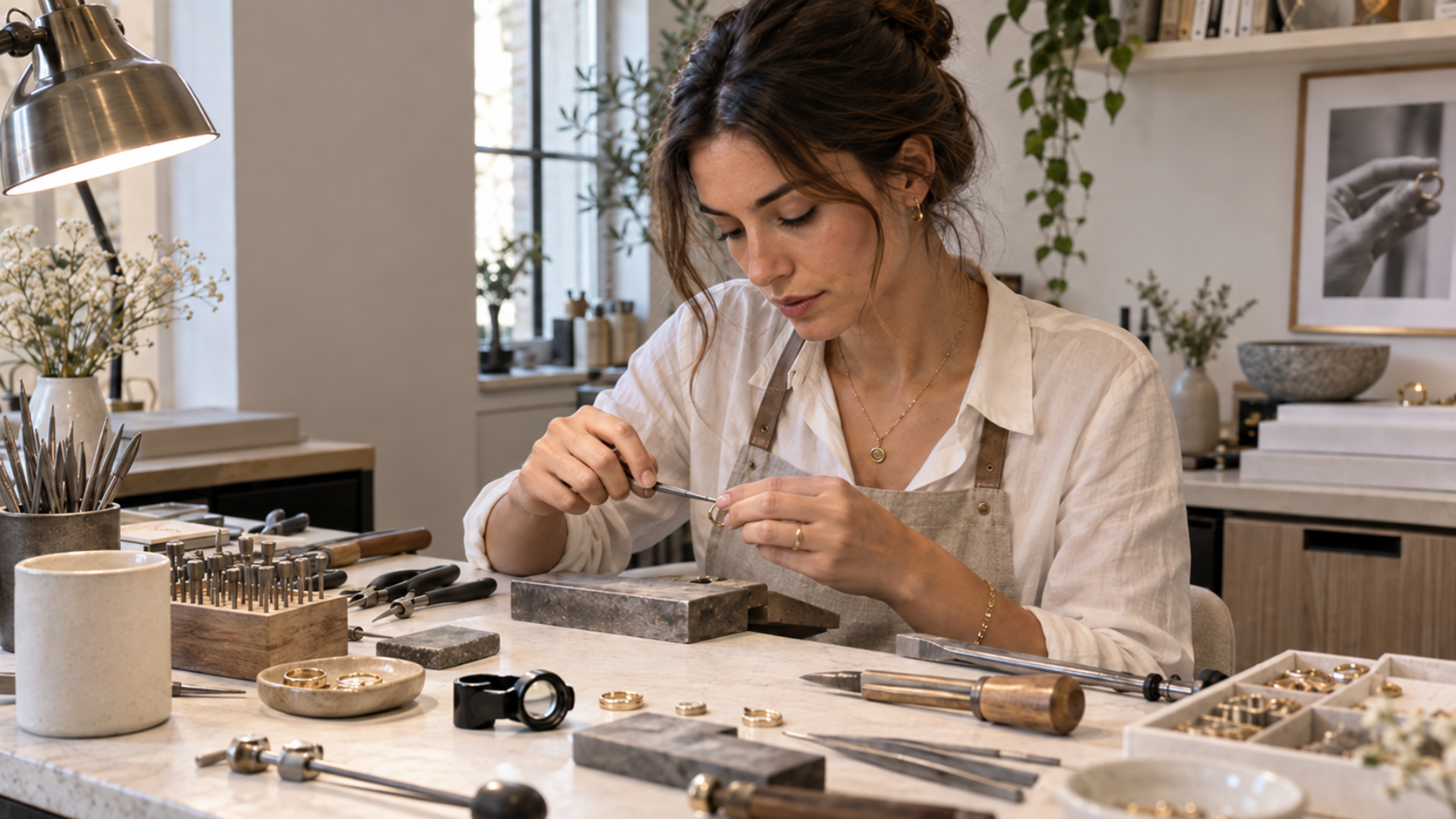
At any given time, our edit brings together around 10 to 20 contemporary jewelry designers, all producing by hand in Florence or Tuscany and working in very small runs, often with pieces that are unique or made only a handful of times.
Why is Florence famous for jewelry?
Jewelry has been part of Florence’s identity for centuries. Goldsmiths and silversmiths were established on Ponte Vecchio in 1593, replacing the trades that had previously occupied the bridge. That decision helped create the association between Ponte Vecchio and precious-metal work that remains one of the city’s most recognisable images today.
But heritage can sometimes become a filter through which visitors see everything else.
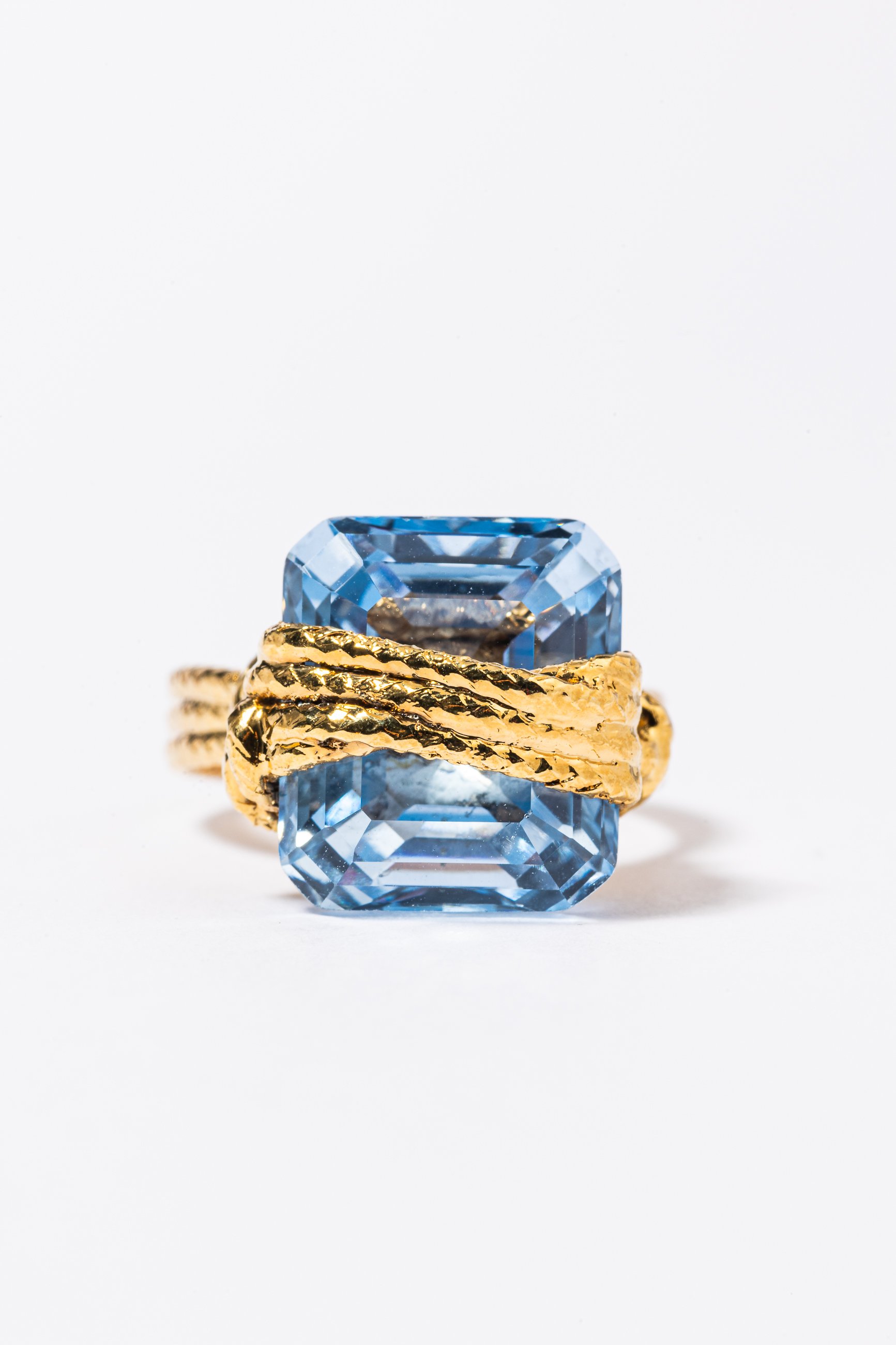
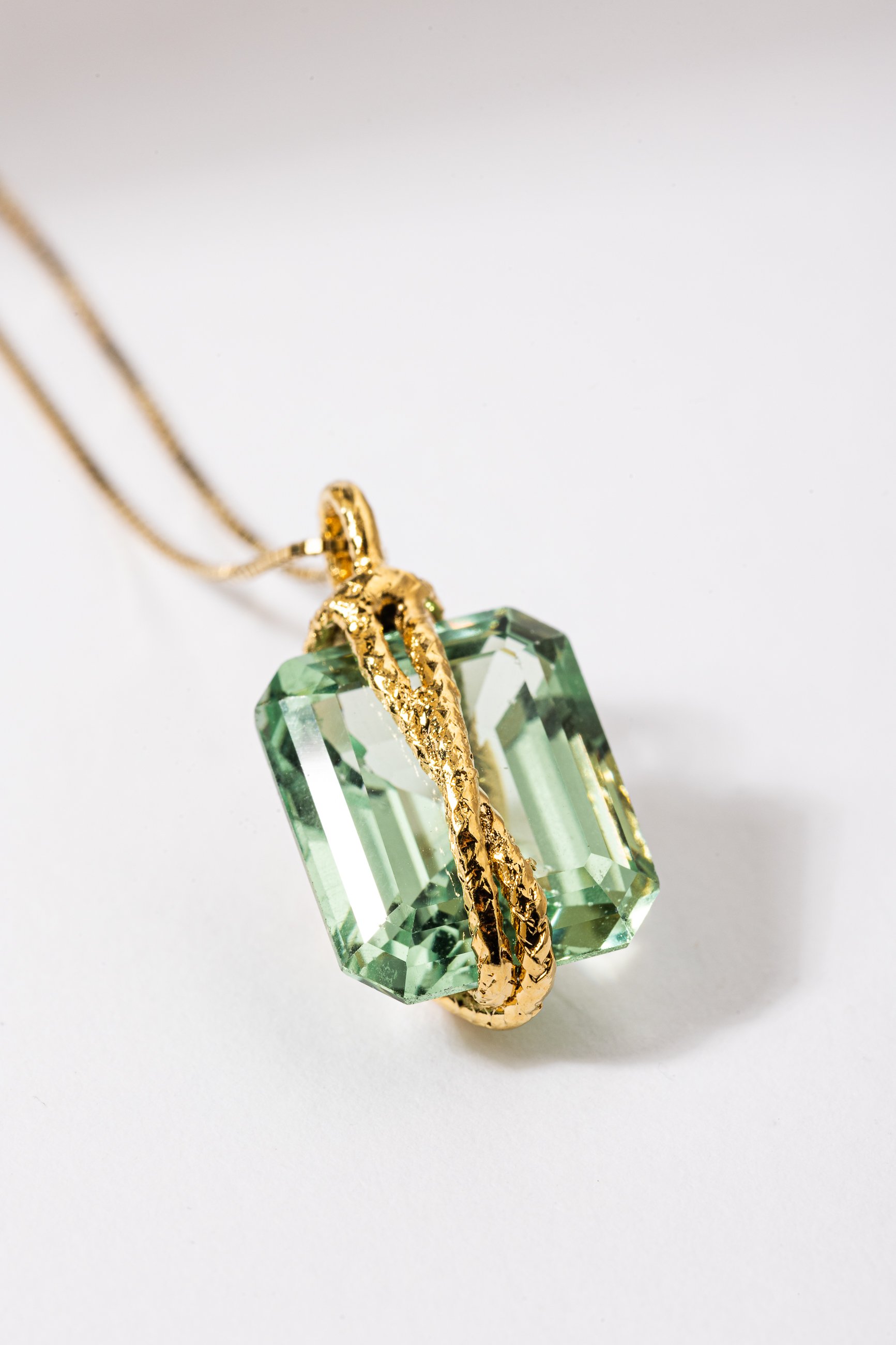
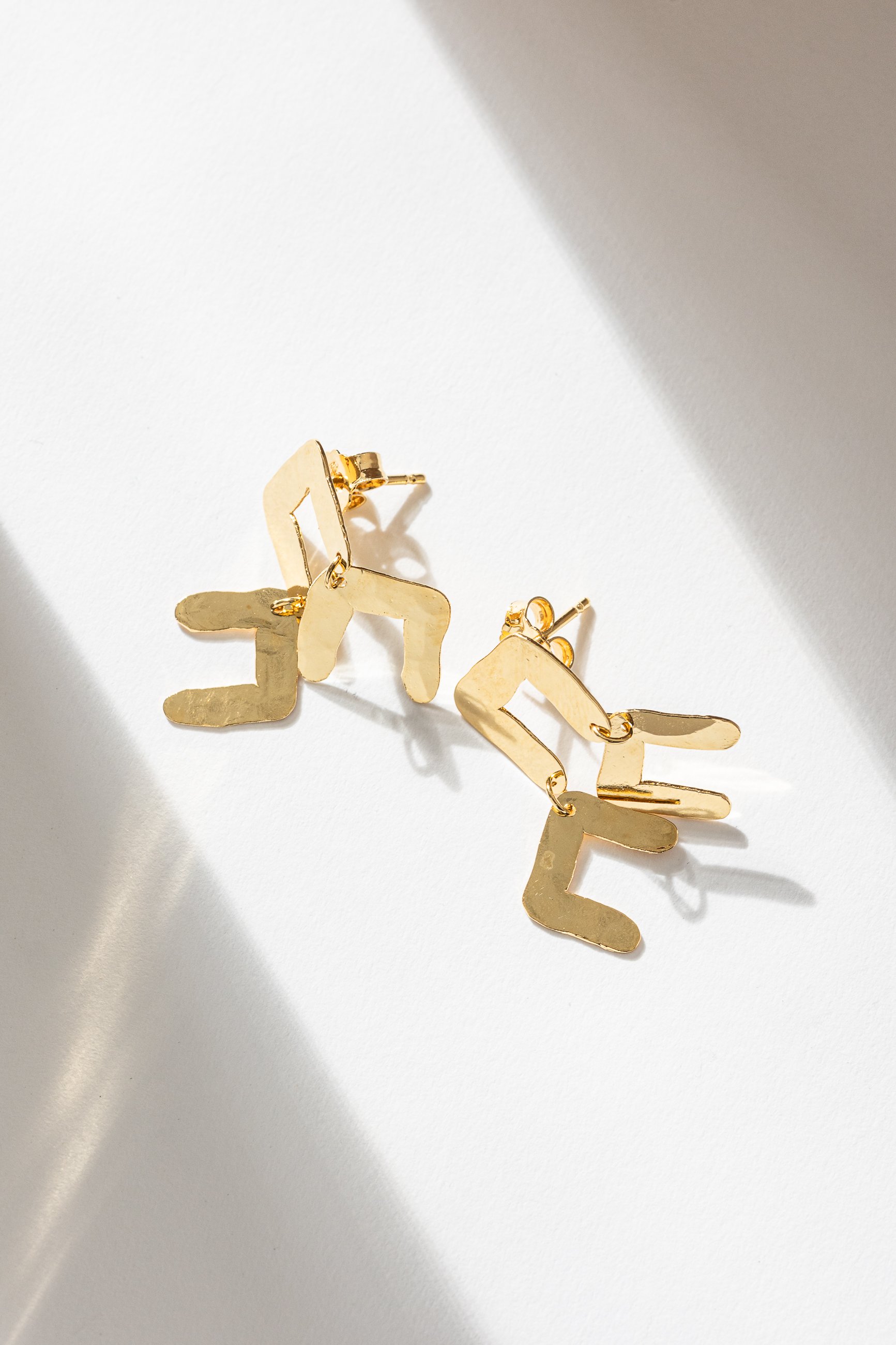
Florence did not stop designing jewelry in the Renaissance. The most interesting contemporary makers working here today may use traditional fabrication techniques, but their visual language can be minimal, architectural, playful, graphic or experimental. They work with silver, gold plating, stones, unconventional combinations of materials and techniques that belong unmistakably to the present.
This matters to us because Florence Factory has never been interested in preserving craftsmanship as a museum display. We look for people who understand their craft deeply enough to do something personal with it.
Ponte Vecchio and contemporary Florence are two different experiences
We would never tell someone visiting Florence to avoid Ponte Vecchio. Quite the opposite: it remains one of the most important places for understanding the city’s goldsmith tradition, and some of the workshops there are genuinely part of that history.
A good example is Fratelli Piccini, a family-run maison founded on Ponte Vecchio in 1903 and now led by the fourth generation. Its atelier still maintains a direct relationship with goldsmithing, engraving, stone setting and other specialist techniques connected to Florentine jewelry making.
But Ponte Vecchio today is not one single reality. Alongside historic workshops of exceptional quality, there are also stores whose connection with contemporary Florentine craftsmanship is much less direct. A prestigious address on the bridge, by itself, does not tell you where a piece was designed, who made it or how closely the retailer is connected to the workshop behind it.
This is why we think visitors should see Ponte Vecchio as an important chapter in the story of Florentine jewelry, rather than the whole story.
If your taste is contemporary, the search becomes broader and more interesting. Many independent designers working in Florence and Tuscany produce by hand in very small quantities, but their studios are scattered across the city, often with limited opening hours and little visibility to international visitors.
One of Florence Factory’s roles is to make that world easier to discover. We currently bring together the work of more than ten contemporary jewelry designers under one roof, selecting micro-productions, unique pieces and small collections that show a very different side of Florentine jewelry.
We see this as a genuine contemporary alternative to the traditional Ponte Vecchio experience: not a replacement for it, but another way of understanding what jewelry made in Florence can look like today.
What does 750 mean on Italian jewelry?
American visitors often notice that Italian jewelry is marked differently from what they are used to seeing at home.
On gold jewelry, 750 indicates that 750 parts out of 1,000 are pure gold, corresponding to 18-karat gold. Italian precious-metal marking rules use fineness expressed in thousandths, so other marks may include 585 or 375.
This tells you about the metal, but it does not tell you whether the piece is interesting, well designed or handmade.
At Florence Factory, we think this distinction is important. Material value and design value are not the same thing.
A piece can contain more gold and still be visually ordinary. Another can use gold-plated silver and require far more thought, experimentation and handwork from the designer.
Our own jewelry edit deliberately includes a large selection of gold-plated silver, full silver, synthetic and natural stones and mixed techniques. We do not believe contemporary jewelry needs to justify itself through the highest possible precious-metal value. Sometimes using plating allows a designer to create stronger proportions, larger forms and more ambitious pieces while keeping the final price honest and wearable.
What we look for when selecting jewelry
Our selection process begins with the design. We ask whether the piece has an identity of its own. Does it still feel interesting once you remove the words “handmade” and “Florence” from the description? Is there a clear idea behind its proportions, materials and construction?
Then we look at how it is made. We choose designers who remain directly connected to their production and work in very small quantities. Some pieces are made one at a time; others belong to collections produced in tiny runs. We prefer this scale because it allows the designer to remain involved in the quality of the finished object and makes personalization genuinely possible.
Finally, we think about wearability. Contemporary jewelry can be expressive without being impractical. We try rings on. We look at how earrings sit and move. We consider weight, balance, clasps, finishes and whether a piece feels as convincing on the body as it does in a photograph.
For us, jewelry is design you wear. It has to work.
Handmade does not mean visibly imperfect
There is a persistent idea that handmade jewelry must reveal obvious irregularities in order to prove that a person made it.
We do not think this is particularly useful.
An experienced goldsmith can produce work with extraordinary precision. The value of handmaking is not that the finished object must look slightly uneven; it is that the maker has direct control over decisions that industrial production tends to standardise.
Those decisions might involve the way a stone is set, the thickness of a band, the relationship between two elements, the finishing of a surface or an adjustment made specifically for the person who will wear the piece.
This last point is particularly important at Florence Factory.
Because we work directly with small designers and workshops, many pieces can be made to order, resized or adapted when the technique permits it. If the ring you love is not available in your size, we can often ask the designer to make it and then ship it to you. Some designers can also make small customisations or variations.
That direct relationship between shop, maker and customer is difficult to reproduce in mass retail, and it is one of the parts of our work we value most.
Why we choose micro-production
Limited production is sometimes used as a marketing expression. For many of the designers we work with, it is simply how they operate.
There may be one person making the collection. Materials may be purchased in small quantities. Individual fabrication can take hours. A certain stone, surface or component may only be available in a handful of pieces.
As a result, we rarely have endless rows of identical jewelry.
For us, this is an advantage rather than an inconvenience. We would rather explain that a piece has sold and ask whether the designer can make another than fill the shop with industrial repetition simply to guarantee stock.
Florence Factory works deliberately with micro-producers and very limited runs, and many objects in our wider selection are unique or difficult to find elsewhere.
What should you ask before buying jewelry in Florence?
The questions are more useful than any single visual test. Ask who designed the piece, where it was made, what the material is and whether the person selling it knows the workshop behind it. If something is described as handmade, ask which stages are done by hand. If a piece does not fit, ask whether it can be resized rather than immediately compromising on another design.
A good retailer should not be defensive about these questions. They should enjoy answering them.
At Florence Factory, explaining why we selected something is part of the job. We want customers to understand who made the piece, what distinguishes the technique and why it earned a place in our edit.
Jewelry as a souvenir from Florence
Jewelry is an unusually good travel object because it carries a place without needing to advertise it.
It does not need a fleur-de-lis or an outline of the Duomo to remind you where you found it. The connection can be much more personal: you know the designer works in Florence, you understand how it was made, and perhaps you had the size made specifically for you.
That, to us, is much closer to the idea of a meaningful souvenir.
It is also why we prefer contemporary pieces over objects designed primarily to look “Florentine.” A city with such an extraordinary past does not need to reproduce that past endlessly in order to prove its identity.
Sometimes the most genuinely Florentine thing you can buy is something that looks completely new.
Services matter too
For international visitors, finding the right piece is only part of the experience. Florence Factory offers assistance in several languages, tax-free shopping for eligible customers and international shipping. If your size is unavailable, we can often have the piece made to order and ship it once it is ready. Not everything we carry is listed online, precisely because collections are small and change frequently, so customers can also contact us to see current in-store pieces and sizing options.
These services may sound practical rather than romantic, but for us they are closely connected to supporting small producers. The easier we can make it for an international customer to buy from a micro-workshop, the less pressure there is for that workshop to become something larger and more industrial simply to reach a wider audience.
That is part of the Florence Factory model: helping small producers stay small while giving their work a larger stage.
FAQ: Buying Jewelry in Florence
Is Ponte Vecchio the best place to buy jewelry in Florence?
It is the historic centre of Florence’s goldsmith tradition and an essential place to see, particularly if you are looking for classic fine jewelry and solid gold. Visitors interested in contemporary handmade jewelry should also explore independent designers and curated spaces elsewhere in Florence.
Where can I find contemporary handmade jewelry in Florence?
Florence Factory in Santa Croce brings together approximately 10–20 designers producing handmade jewelry in Florence and Tuscany in very limited runs.
What does 750 mean on Italian jewelry?
It indicates 750 parts of pure gold per thousand, equivalent to 18-karat gold.
Is all jewelry sold in Florence handmade?
No. Florence has both artisan production and industrial retail. Ask specifically where and how a piece is made.
Can jewelry be customized?
Often, yes. Many designers working with Florence Factory can produce a missing ring size or make small customisations depending on the piece and technique.
Does Florence Factory sell only solid gold?
No. The selection focuses strongly on contemporary design and includes silver, gold-plated silver, natural and synthetic stones and mixed techniques.
Does Florence Factory ship to the United States?
Yes. International shipping and tax-free shopping for eligible in-store customers are available.
A different side of Florentine jewelry
Ponte Vecchio tells an essential part of Florence’s jewelry story. We want Florence Factory to help tell what comes next.
Our selection is deliberately contemporary, independent and small-scale. It brings together designers who would otherwise require many separate visits to discover, and gives customers the possibility to compare their work, understand the techniques and, when possible, personalise the final piece.
For us, that is the most interesting reason to buy jewelry in Florence today: not simply because the city has been making it for centuries, but because talented people are still deciding what Florentine jewelry can become.

This is a modern, minimalist brooch handcrafted in gold-plated brass. It features a circular form with a subtly textured, brushed surface that gives it a soft, elegant glow. A clean diagonal incision cuts through the lower half, introducing a quiet sense of asymmetry and depth.
Set near the top edge is a rectangular green tourmaline, embedded vertically into the metal. The deep green hue creates a striking contrast against the warm gold, adding a refined touch of color and sophistication.
The design is both sculptural and understated, inspired by geometric forms and modernist aesthetics. Its simplicity and balance make it a timeless statement piece, perfect for those who appreciatecontemporary art jewelryand elegant minimalism.